
How is it to live as a student in Palestine? Lundagård writer Paula Dubbink visited the Holy Land to experience Islam, Christianity and Judaism in practice. And met two Palestinian students in the fulltime Christmas-city: Bethlehem.
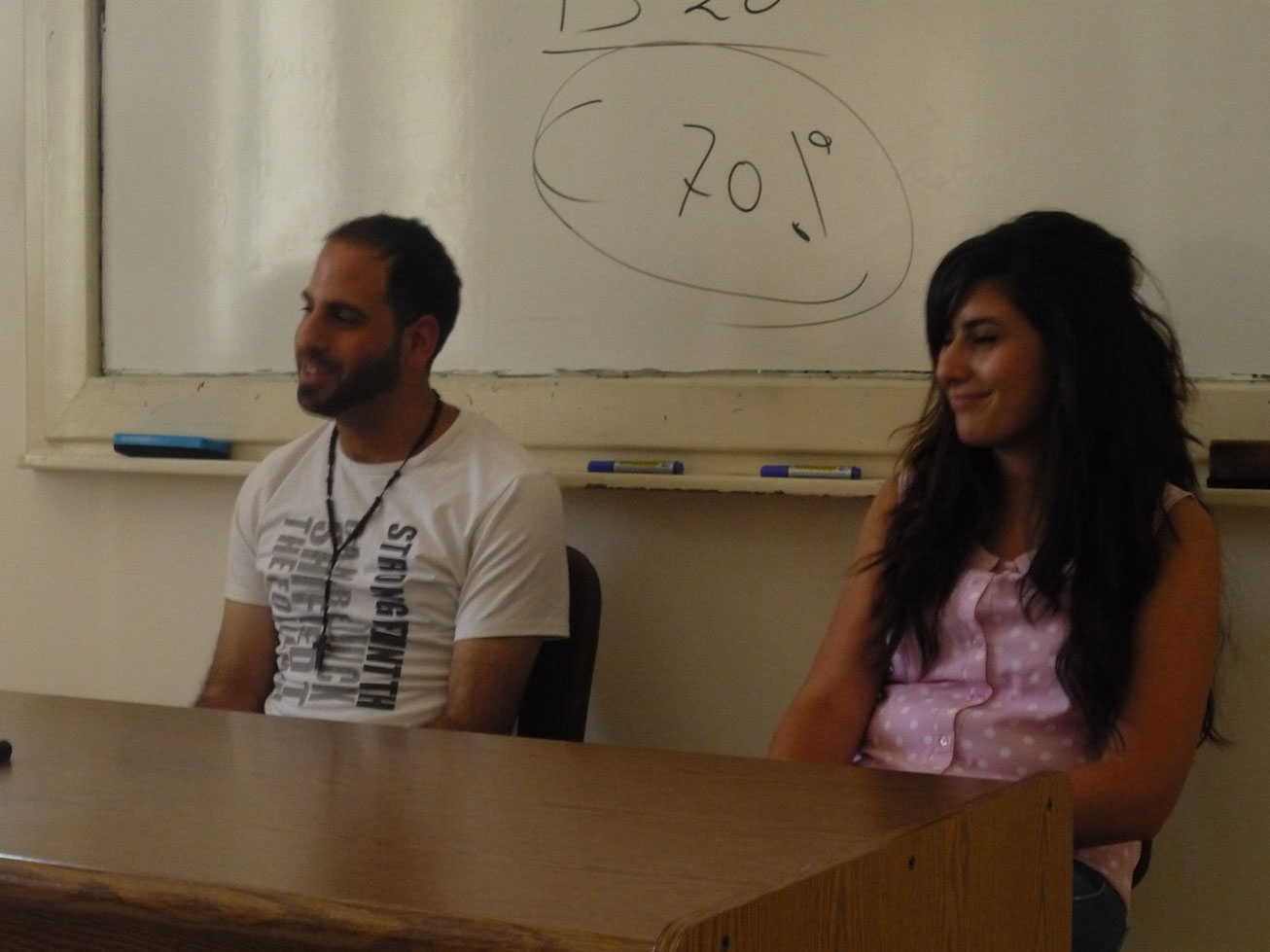
Photo: Paula Dubbink.
They enter the classroom a little shy and take place on two chairs in the front, where twenty pairs of eyes stare at them. They are Tony and Areej, two young Palestinian Christians who have recently graduated with a theology degree from Bethlehem University. The coming hour is meant as an exchange between them and us. Us is my group of study mates, for the biggest part coming from Sweden or other Western countries and studying a course with the name ‘Children of Abraham’. After a week in the Holy Land, we all have the feeling that we have been here for a month, overwhelmed as we are by all impressions, information, lectures, visits to Holy sites and cheap falafels.
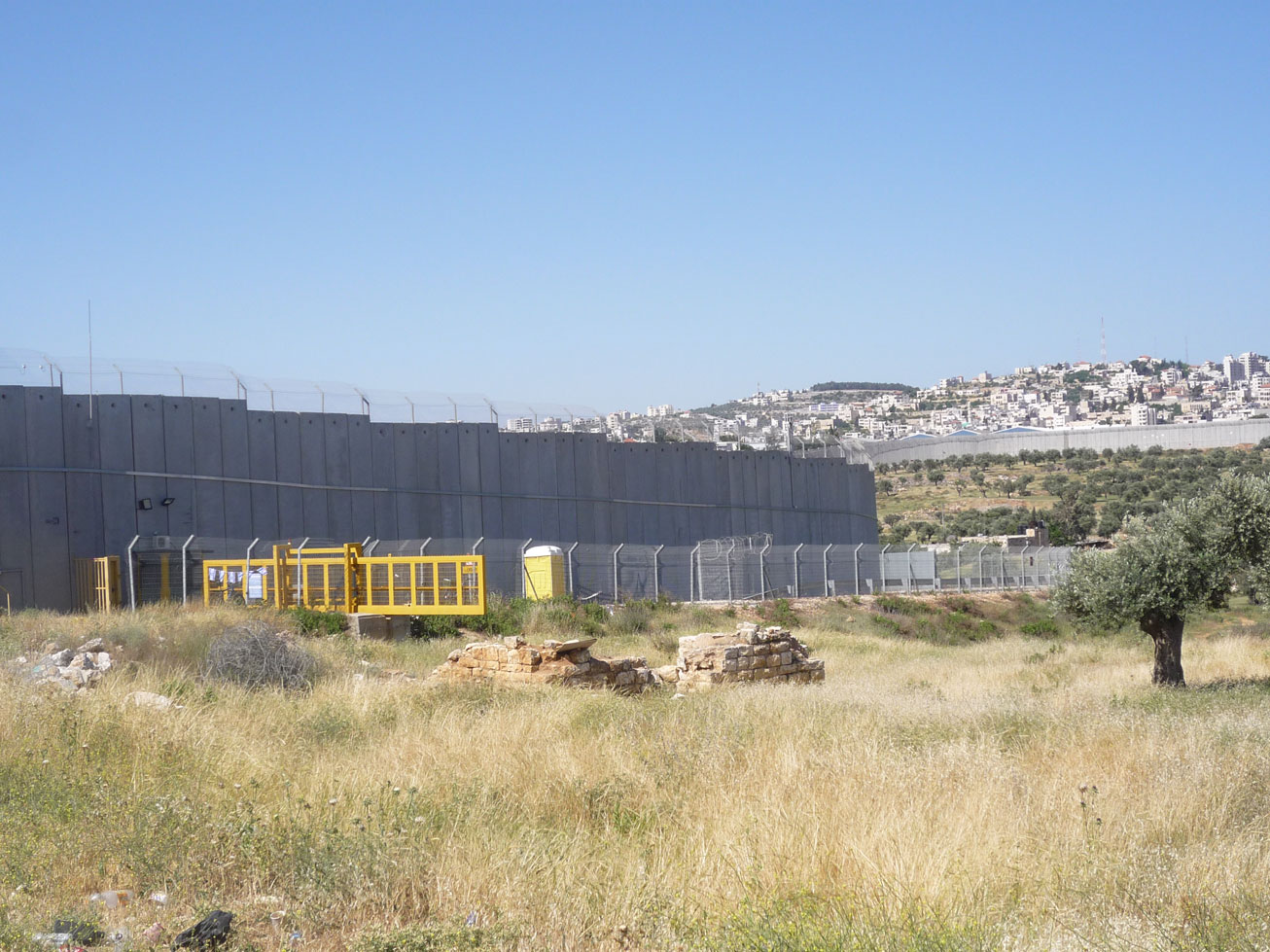
Where shall we start, Tony asks. Shall I just tell something about being a student in Bethlehem? We nod. Tony heads off and tells about the programs that Bethlehem University offers, the length of the courses, the amount of students that continues for a master, etcetera. We smile gently, but we’re not here to get study advise, thank you. We want to know what their lives are like. What does it mean to live at a distance of only a few kilometers from Jerusalem, while every visit there means waiting and walking through an Israeli checkpoint, as the big Wall separates the two towns? How does it feel to live in the world’s best-known conflict – a conflict that everyone seems to have an opinion about?
It takes a few questions from our side, but then the stories slowly come. How Areej wants to find a job within social religious work, but how the unemployment rate within the Palestinian territories is over 50 percent and how it is extremely hard to find something. How Tony got a job in Jerusalem, but how his working visa expired and his employer had to say “we’re sorry”. How Areej’s family found a nice house, but near the checkpoint in the Wall – “and who wants to live there?” She continues about the dreams she had as a student and that she sees breaking down now. “You can’t dream, because there is the wall and the checkpoints. There is the permits and the restrictions. You can’t dream, because this is your reality.”
Since 1967, the West Bank, in which Bethlehem is located, and the Gaza Strip have been under Israeli control and the Palestinians have only limited self-governance. We’re talking about very daily things; about not having autonomy over electricity and water, which instead is governed by Israel. The amounts of water provided often don’t suffice in summer. But the electricity is a lot worse in Gaza, they conclude together. In the 1990s, the Oslo Accords set the first steps to a two-state solution, in which Israel and Palestine would coexist and share the Holy Land between them. Twenty years later, however, the occupation continues, the amount of Israeli settlements in the West Bank has tripled and a solution might seem further away than ever. Tony says “I don’t mind having Jews around, but I don’t want occupation.” Both students are very clear: over forty years of occupation is too long.
We ask whether the two have hope for the future. Realistic hopes or real hopes, they answer. The decisive moment for a two-state solution might already have passed with the high amount of settlements. Maybe a one-state solution is the only good option left. After all, haven’t the different religions and cultures lived peacefully together for centuries in the past? Areej: “But actually it’s bad both ways.”
Do they consider leaving, we ask? Palestine suffers after all from a brain drain; many high-educated Palestinians leave the country, looking for a job and a more promising future elsewhere. “No, I’m planning to stay”, Areej answers. This is her land. Tony agrees. “This is my place, my soul.”
The day after we visit Bar-Ilan University in Tel Aviv. I’d like to interview students there as well, but it doesn’t work. We instead have a conflict-solving workshop and a lunch with the entire group. Everyone is kind, understanding and when we have to reenact the conflict in a debate setting, the student defend the Palestinian position in a way that is as credible as the Israeli standpoint. They are friendly people, sensible people, people who also want the best for their country and its inhabitants.
And so it seems during our entire visit. The host families that we visit for a Shabbat meal, the Palestinian guide in the Bethlehem Church, the Jewish tour guide in the Holocaust Museum, the Jewish lecturers, the imam in the mosque, the Christian lecturer: nobody says that they do not want peace. Everyone is longing for a solution to this tiring conflict. But as Areej says: “All people want peace. The question is how many people are seeking peace.”



1 Comment
an Israeli
This article gives a distorted picture. Since 1967 the west bank has been under Israeli control AFTER the Arab countries and the “Palestinians” constantly attacked Israel and threatened to wipe Israel off the map, and made some steps that are considered Casus Belli (like chasing out the UN forces in the Sinai, massing Egyptian troops in the Sinai, closing the Tirans etc.)
The Arabs wanted, said and took steps to attack Israel BEFORE 1967 – for those who don’t know, when the WHOLE of the west bank and EAST Jerusalem, Golan heights and the Sinai were under ARAB control.
Why did they attack and wanted to destroy Israel then? For the same reason they attacked in 1948 and before that – because the Arab Israeli conflict (which is mistakenly referred to in the last few years as “Palestinian” Israeli conflict) is NOT about the “occupation” the checkpoints or the wall and it’s not about big bad Israel which stole the land of the “Palestinians” and opresses them.
The Arab Israeli conflict is about the Arabs’ unwillingness to accept the existence of a Jewish state ANYWHER in the holy land.
The “poor Palestinians” could have had their own independent state in 1947 – with Jaffa, Acre, the whole of the west bank and parts of the Galilee.
Before the 6 days war in 1967 the Jordanians, not the Israelis, controlled ALL of the old city of Jerusalem, east Jerusalem and the WHOLE of the west bank. Needless to say, they chased out all the Jews who lived in the Jewish quarter of the old city, burnt the Jewish quarter down and denied the Jews access to pray in the wailing wall.
That’s because the Arabs are so humabe and Israel is so bad…
Did the Jordanians establish a Palestinian state on these territories? Did the Egyptians who controlled Gaza gave it to the “Palestinians” so they can have an idependent state? NO. Why?? Because the “Palestinians” are Arabs who are no different than the Arabs in Jordan or Egypt or Syria or Lebanon. Not they and not other Arabs or anybody else referred to them as “Palestinians” who should have a separate “Palestinian” state.
It’s only after 1967 that they started to call themselves Palestinians to make it look like they are the true inhabitants of Palestine – which they are not and never were.
Palestine before the creation of Israel was under a British mandate for 30 years and before that under the Ottoman empire control for 400 years. It was a mostly empty, barren, under developed place as every visitor to it in the 19th century reports.
The Ottomans counted about a quarter of a million people in ALL of Palestine. a place which has now more than 10 million people (in Israel and the west bank).
Many “Palestinians” came to the land from Arab countries after the Zionists started to develop the place from the 1880’s and the Brits continued to develop it from 1917.
After Israel took control of the west bank in 1967 there were NO checkpoints or wall or any restriction on the movements of the Arabs in the west bank. In fact, they used to come to work in Israel daily – some of them with their cars. Israeli invested millions in upgrading the infrastracture of Arab villages and twons in the west bank – which were very primitive. Supplying them with water, electricity etc.
The arabs had no contriol over the west bank until in the 1990’s they (Yasser Arafat) were finally willing to recognize Israel’s right to exist and signed the Oslo accord with Israel in which Israel gave a lot of territory to Arab control – towns like Ramallah, Bethlehem, Jenin, Nablus, Jericho etc.
Gaza even had its own airport in those days.
But then the Arabs (“palestinians”) came back to their own terrorist self and started blowing up buses and coffee shops every other in Israel in an Intifadah that took the lives of more than a thousands Israeli babies, women, old people, whole families. Just regular civilians sitting on buses, sitting in pizerrias, coffee shops, enjoying a day out in a mall etc.
Only then did Israel built the wall and checkpoints because it became obvious that we are dealing with a barbaric, violent Arabs who are not interested in peace and compromise but in shredding to pieces as many Israelis they can and in chasing the Jews out of any inch of the holy land.
So don’t tell us stories now about how the one and only reason the “Palestinians” suffer is the wall and checkpoints.
Tell us about Arabs who refused any compromise, who attacked and tried to kill the Jews in Palestine even before there was Israel.
Who when given a chance to create their first own independent Arab state in Palestine chose the path of war and violence.
Show us one Arab country in the middle east which is just, liberal, democratic, developed. Show us the Arab society with all its oppression of women and the weak in general. With no social justice and freedom.
Stop already with the lie that Israel is the bad guy here. Israel is fighting for survival against a barbaric culture and people who stop at nothing to kill civilians. It’s that barbarism and violence which are the reason for the checkpouints and wall.
Once the Arabs in the west bank agree to live in peac with Israel and agree to the 2 state solution, and fight their terrorists, then there will be no wall, no checkpoints and no restrictions.